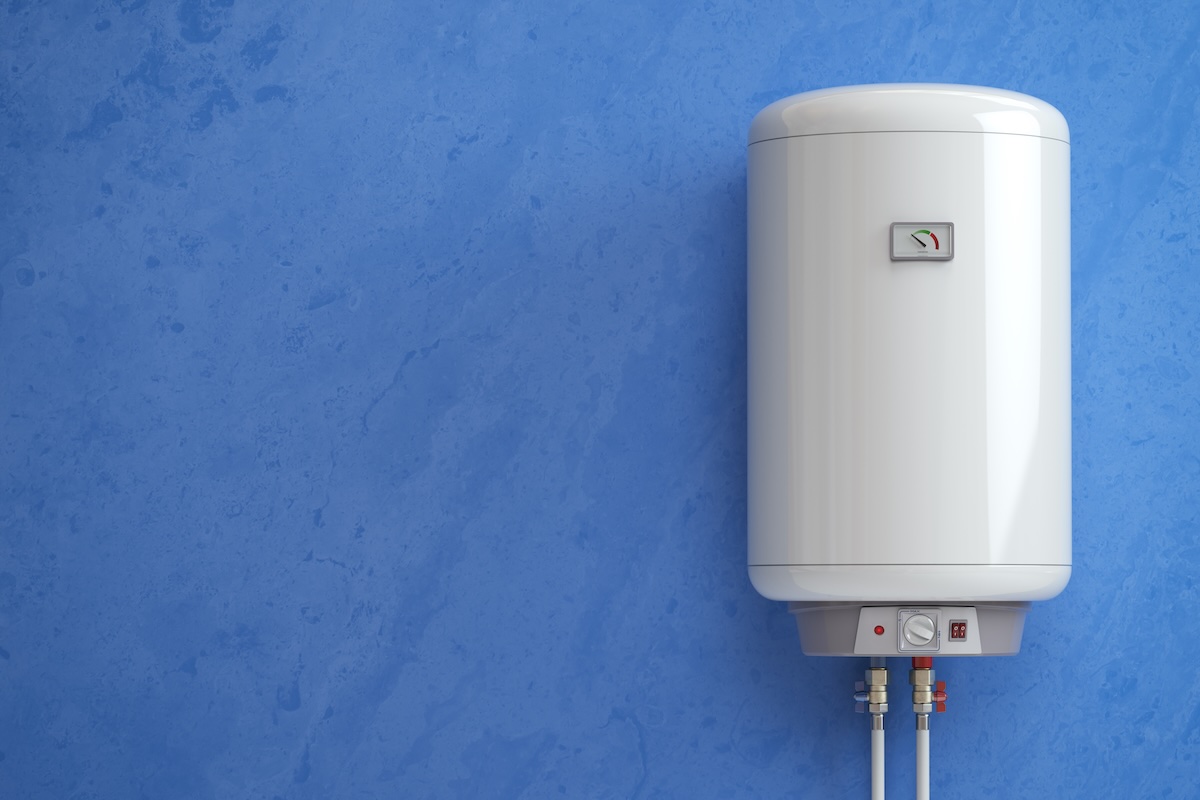
Is Your Hot Water Tank Earthquake-Ready? Seismic Strapping for Vancouver Island Homes
Two metal straps, solid anchors and flexible connectors. Run this 5-minute check to see if your hot water tank is ready for the next earthquake.

The annual Great BC ShakeOut on October 15 was a reminder that earthquake preparedness starts with small steps around your home. Want to know one of the easiest places to start? Your hot water tank!
Whether it's tucked into a Victoria basement, a Nanaimo garage or a Campbell River utility closet, your hot water tank needs to stay secure if the ground ever starts shaking.
Here's how to check whether yours is properly strapped, what you can fix yourself and when to call for help! Already know you need a professional? Give Archie Johnstone a call today.
What Does an Earthquake-Ready Hot Water Tank Look Like?
An earthquake-ready hot water tank has two heavy-gauge metal straps, one around the upper third and another around the lower third. Both should be securely anchored to wall studs or suitable masonry, with the tank held snug and tight against the wall. Flexible water and gas connections help prevent pipes from breaking if the tank shifts.
Why Is Your Hot Water Tank an Earthquake Risk?
Your hot water tank is heavier than you might think. A standard 189-litre (50 US gallon) tank holds approximately 189 kilograms of water before accounting for the weight of the tank itself.
If it tips during an earthquake, it could:
- Break water lines and flood your home.
- Damage gas connections, creating a potential fire hazard.
- Destroy a valuable source of emergency drinking water.
According to Earthquakes Canada, the Pacific Coast is Canada's most earthquake-prone region. Southwestern BC experiences approximately 300 small earthquakes annually, and a magnitude 7.3 earthquake struck central Vancouver Island in 1946.
Earthquakes can't be predicted, but securing your tank is one practical precaution you can take to keep yourself prepared.
Is Your Tank Strapped Properly? A 5-Minute Check
Grab a flashlight and take five minutes to inspect your tank.
- Count the straps. There should be two: one around the upper third and another around the lower third. A single strap isn't sufficient.
- Check the material. Look for heavy-gauge metal strapping designed for water heaters, not thin perforated plumber's tape or nylon ties.
- Inspect the anchors. Straps should be secured into wall studs or appropriate masonry anchors, never drywall alone.
- Test for movement. Gently check whether the tank rocks, without forcing it. A gap of more than a few centimetres behind the tank may require additional blocking.
- Look at the connections. Check whether the water and gas connections have suitable flexibility. Rigid connections may need upgrading. Don't touch or adjust gas piping.
If you find a single band of plumber's tape, a rigid gas line or a tank that rocks, it's worth having a plumber take a look! Better to discover the problem during a routine check than after an earthquake. Get a professional quote from Archie Johnstone today.
Can You Strap a Hot Water Tank Yourself?
If you're a handy person, installing a commercial water heater earthquake strap kit may just be a manageable weekend project!
These kits typically include metal straps, lag screws, washers and mounting hardware. Nothing too out of the ordinary for someone who knows their way around a tool shed.
For a tank already positioned securely against a stud wall, you may be able to locate the studs and install the two straps yourself! However, call a professional if the job involves any of the following:
- Disconnecting or relocating the tank
- Re-piping water connections
- Replacing or adjusting gas piping
- Difficult installations involving concrete walls, tight closets or raised stands
- Heat pump water heaters requiring specialized restraints
In BC, gas appliance and gas piping work generally requires a Technical Safety BC permit and a licensed gas contractor. Limited homeowner permits are available for qualifying properties.
Archie Johnstone's licensed plumbers can assess your installation and handle any necessary hot water tank installation and repair.
Why Does the Gas Connection Matter?
For gas-powered water heaters, strapping protects more than your floors. If an unsecured tank moves during an earthquake, a rigid gas connection could break and release natural gas.Resultantly, FortisBC recommends securing natural gas appliances and using approved flexible metal connectors where appropriate.
After an earthquake, don't shut off your gas simply as a precaution. However, if you smell gas, hear hissing or notice damage suggesting a gas leak, leave the area immediately.
If safe, shut off the gas at the meter. Call FortisBC at 1-800-663-9911 or 911 for emergencies. Never turn gas service back on yourself. Keep the meter accessible and know where your shut-off wrench is located.
For burst water lines without a gas emergency, Archie Johnstone also offers 24/7 emergency plumbing.
Could Your Hot Water Tank Be an Emergency Water Supply?
Here's something homeowners often overlook: your hot water tank could hold a substantial amount of usable water during an emergency.
PreparedBC recommends storing at least 4 litres of water per person daily. For a family of four, that's 48 litres for three days. A 189-litre tank could theoretically provide almost 12 days of that minimum allocation, provided the water is safe to use.
If your water supply is interrupted, first confirm that the tank and plumbing haven't been contaminated or damaged. Shut off the heater's power or gas supply and close the cold-water inlet. Once the water has cooled, open a hot-water tap to admit air and draw water through the tank's drain valve.
Expect some sediment, particularly if the tank hasn't been flushed recently. Treat water when necessary, and never assume tank water is safe to drink after flooding or contamination. This is another reason to keep your tank maintained regularly.
What About Tankless and Heat Pump Water Heaters?
Not every water heating system requires the same earthquake protection. Tankless water heaters are mounted to a wall and don't have a large storage tank that could tip over. However, secure mounting and appropriate piping connections remain important.
Heat pump water heaters typically have a compressor mounted above the tank, changing their weight distribution. Follow the manufacturer's restraint specifications and have the installation assessed professionally.
Considering an upgrade? We have a full guide comparing different water heater options for you here.
Make It Part of Your Earthquake Preparedness Checklist
The Great BC ShakeOut took place on October 15, 2026, at 10:15 a.m., with British Columbians practising the Drop, Cover and Hold On maneuver. ShakeOut happens every October, but your tank can be checked any day.
While you're at it, secure any tall bookcases and other heavy appliances, and locate your home's water and gas shut-offs.
Five minutes with a flashlight could prevent considerable damage in the case of an emergency.
Get Your Hot Water Tank Earthquake-Ready
Five minutes with a flashlight is all it takes to identify whether your hot water tank needs attention.
If you've discovered loose straps, outdated connections or a tank that rocks, Archie Johnstone's licensed plumbers and gas fitters can help secure, repair or replace it properly.
Book a hot water tank safety check with Archie Johnstone Plumbing & Heating today. No pressure, just one less thing to worry about.

Fall Furnace Maintenance Checklist: Get Your Heating System Ready for Winter